Helping a top 5 UK high-street bank detect and protect customers from fraud
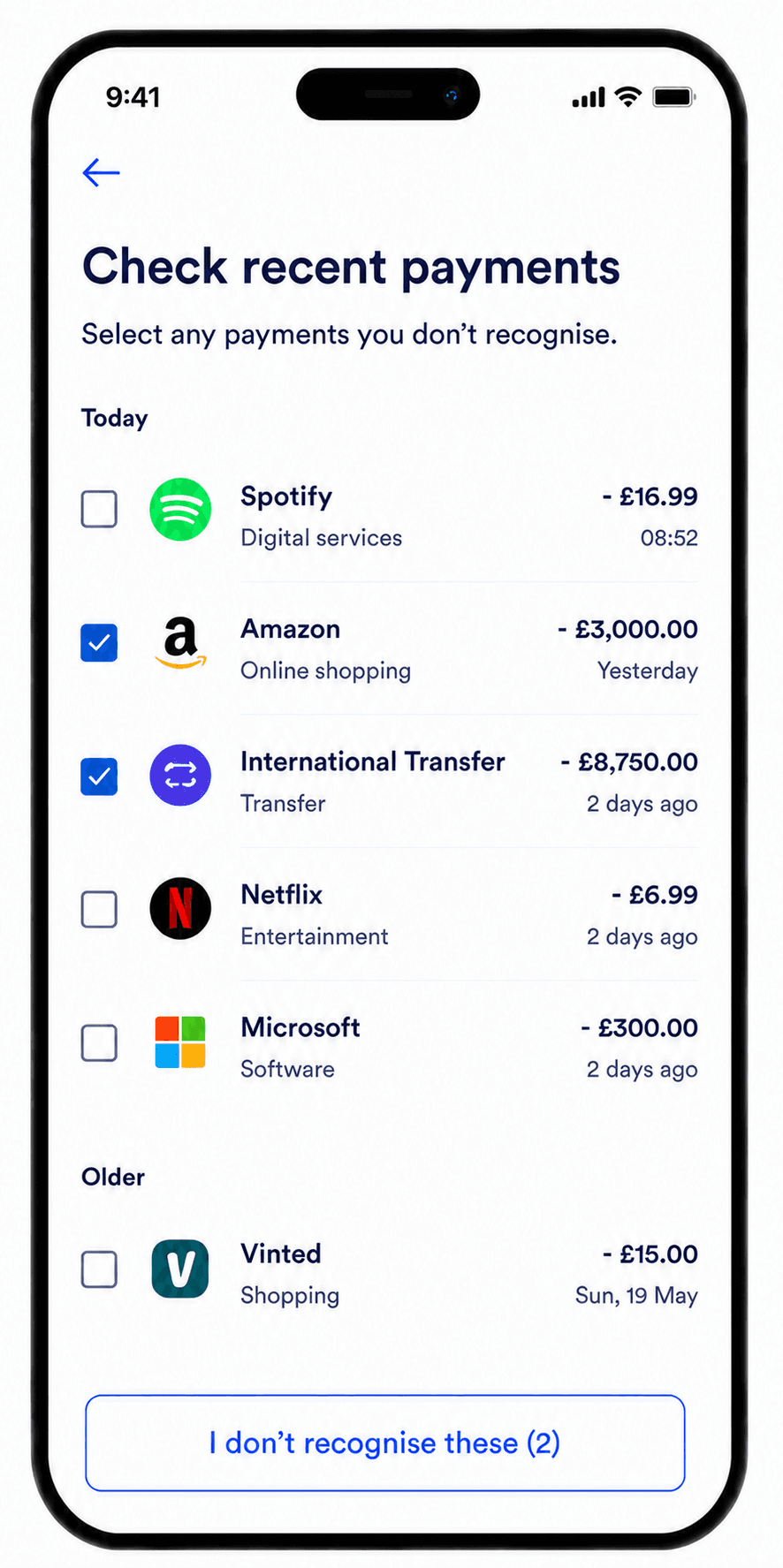
Disclaimer: The Work for this project is protected under NDA, so any visuals shown have been produced for illustrative purposes and are not the actual work produced
The problem & challenge
- Banks are currently grappling with the challenge of customers disregarding SMS messages that are sent to verify suspicious transactions,
- This can result in either successful fraudulent activities and monetary losses, or genuine customers being locked out of their accounts
- Addressing fraud through frontline staff calls adds time to the customer journey and raises operational expenses for the bank.
The scope of this project was to reimagine the experience of fraud checks and the varying journeys which follow these checks so that customers could self-serve these journeys in the clients mobile app.
My role
From January 2022 to present, I have been leading the design of the fraud remediation app experience, working closely with an in-house client designer to navigate a new design system that was implemented during the early stages of the project. In addition, I collaborated closely with two product managers, researchers, business analysts, a copywriter, and several SMEs across different functional areas of the bank. These new features are scheduled to be launched to UK customers in 2023.
Who are the users
Simple personas had been created following a small-research initiative prior to my involvement in the project. These personas served as good reference material (especially when onboarding to the project) and helped build a shared understanding among the team. As more research was conducted, the personas were further developed into living documents that evolved with multiple rounds of user testing.
We also made considerations to vulnerable customer behaviors, utilizing a toolkit that was recently rolled-out throughout the bank. More information about this toolkit later on.
Workshops
Current experience
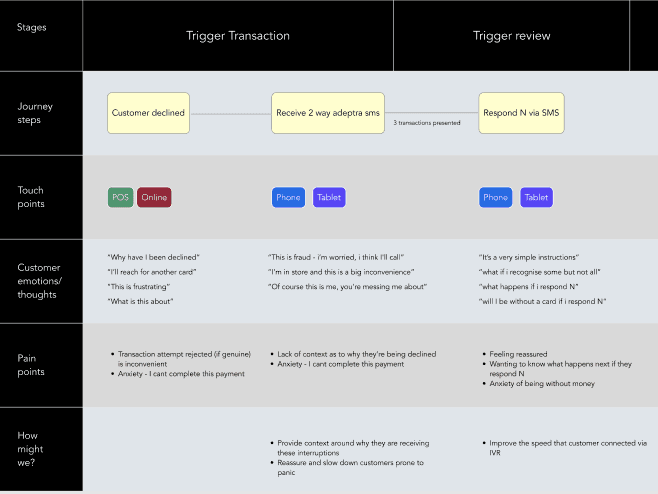
Using research data gathered prior to my involvement in the project, which focused on todays journey which relies heavily on SMS messages, I facilitated workshops with a two-pronged approach. Firstly, we mapped out the customer experience and emotional journey to align teams with the end-to-end experience. Secondly, we identified pain points and process timings, and encouraged a problem-solving mindset with a 'How might we' lane. The workshops highlighted the challenge of convincing customers to use our self-serve app in the face of fraud concerns, as their initial inclination is to contact frontline staff.
Using this approach, we were able to create multiple problem statements, identify various user needs, and defined high level outcomes or behaviors that we could use to measure success.
Ideation sessions
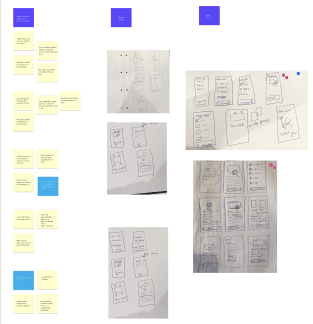
To address the challenge of guiding and reassuring customers through a self-serve app journey while dealing with the emotional impact of fraud, I organized an ideation workshop that brought together our cross-functional product team. The objective was to generate a wide range of ideas and explore potential solutions. We gained valuable insights and direction for the design, and it guided us towards an MVP solution.
Some early hypothesis
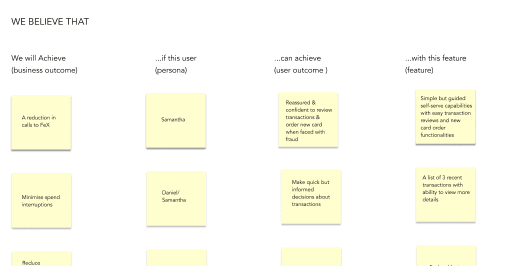
We utilized our problem statements, high-level user needs, ideas from the ideation sessions, along with outcomes we could use to measure success, to develop hypotheses that aided us in prioritizing potential solutions based on their impact and feasibility.
Wireframes
I expanded on the initial concepts generated during ideation sessions by creating additional sketches to establish a more complete end-to-end flow. However, I quickly transitioned to wireframes since I was utilizing a robust Figma design system, enabling me to easily drag and drop components and build out journeys with ease.
Reviewing these flows, we identified 4 key phases within the journeys:
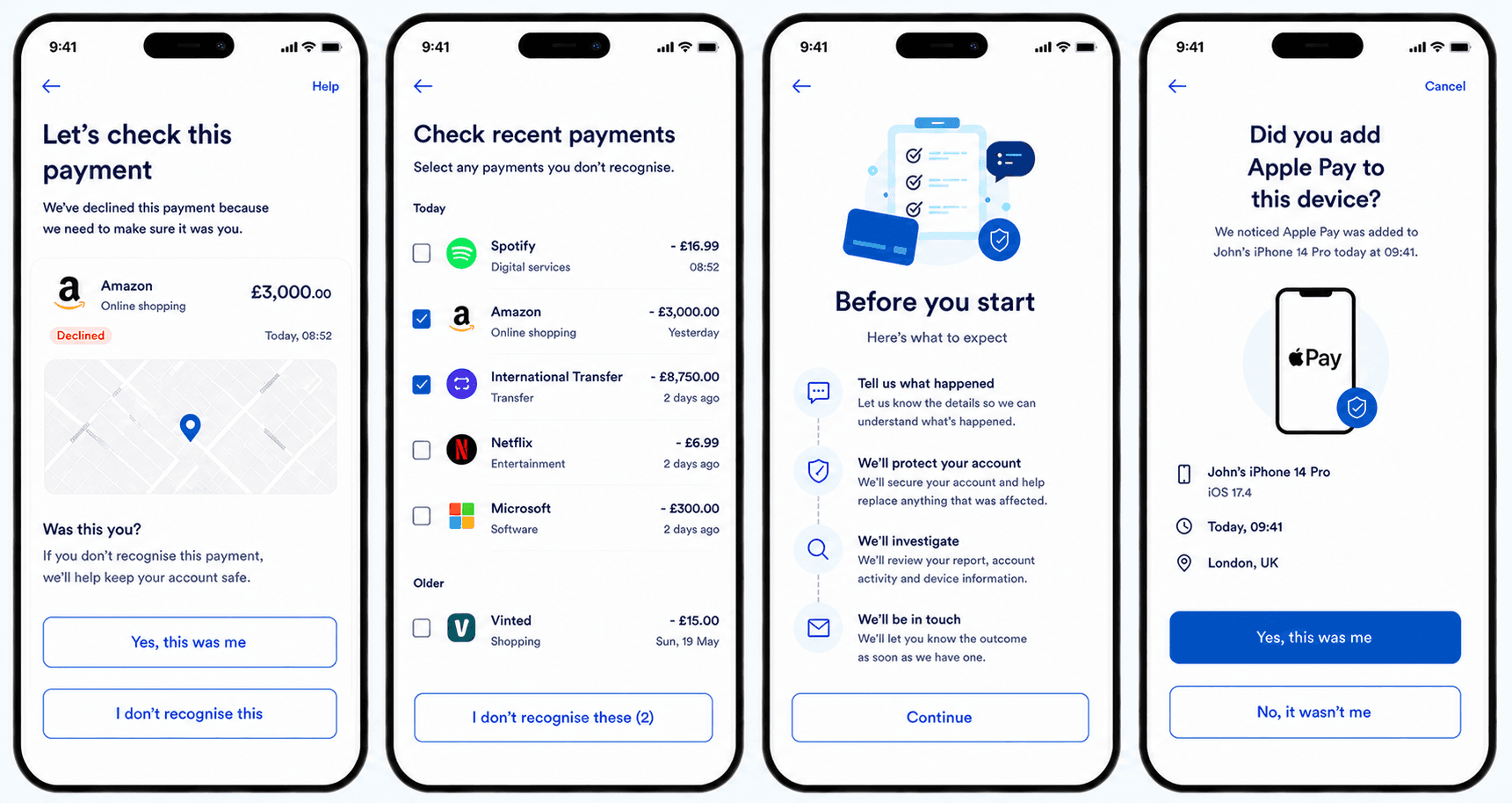
- The trigger transaction stage is where a customer needs to review 3 recent transactions and confirm whether they recognise the transactions or not. If they recognise them, then their card is unblocked and if they don’t recognise something, then their card is blocked to protect their account
- The wider transaction review stage is where after identifying unrecognised transactions and blocking their card, we would widen the amount of transactions a customer could view so they can check for more fraud from their recent transactions. From here a customer could either change their mind and realise they had made a mistake and unblock their card or submit 1 or more unreognised transactions which would mean their card would then need to be permenantly cancelled
- The new card order stage is where a customer orders their replacement card, which can be used immediately online or with a mobile wallet provider, rather than needing to wait for a plastic card to arrive via the post
- The investigation stage is how the customer would then be encouraged to call the clients frontline staff to discuss their unrecongised transactions as well as how the investigation, refunds etc would be reflected in the customers app
Vulnerability workshops
To gain some initial confidence in our wireframes, I led a customer vulnerability workshop, utilizing an internal toolkit that is now an integral part of every designer's process. During the workshop, we examined our flow through the lens of nine common vulnerable customer behaviors and twelve potential customer harms, assessing whether our design was mitigating or exacerbating the negative implications of these behaviors.
‘Thinking’ Agile
I previously collaborated with this client on a project aimed at breaking down a large delivery into smaller parts to bring value to customers sooner. The initial release provided insights that we leveraged to guide subsequent ones.
In this project, we aimed to introduce several new features that would build upon our previously delivered or in-build work. However, determining the MVP was complicated by the need to consider the status of app functionality we depended on being launched at the time our developers could begin building our work.
Following these discussions, we were able to define our MVP and I was able to generate several mockups and flows following this which allowed us to prepare for some user testing.
User testing
Preparing for round one
I worked closely with our researcher to prepare a research brief and discussion guide and held virtual workshops with our core product team to generate testing hypothesis. We had some high-level hypothesis following our earlier workshops which we included, but I also encouraged the team to think more specifically about stages in the flow, especially parts where there were riskier assumptions which we could create hypothesis for.
Round one
The testing results were positive but also surprising in some quarters. It was revealed that participants were not totally aware of the impact of fraud and scams, despite fraud prevention being a common rhetoric from banks, and why they were being asked to carry out transactions checks. Participants advised they would be hesitant to engage with push notifications, and tended to skim over important context and reassuring copy.
On the other hand, breaking down the journey into smaller chunks, enabling customers to unblock their cards if they made errors in identifying fraud, and displaying confirmation dialogs were effective in slowing down impulsive customers who may have been rushing through the process.
Overall, we found that self-serving in the app not only simplifies the journey but gives customers a sense of empowerment and control, and strengthened their percevied trust in the bank.
We decided to book in another round of tests, in order to enhance what we had already tested and to learn more about some new ideas as well.
Preparing for round two
I collaborated closely with our copywriter to enhance the copy throughout the journeys. This was a challenging task as we needed to provide sufficient context regarding the journey, reassure customers who had experienced fraud, and inform them of what to expect next, all while mitigating any concerns or potential dropouts from the app journeys.
We identified an additional user need related to the next steps that would follow the journeys in round one. Our MVP journey enabled customers to identify fraudulent transactions and order a new card, but we didn’t include the capability to handle the transaction dispute process in the app as ‘digital disputes’ is a wider piece of work which couldn’t be tackled solely by my team and was currently deprioritised by my client.
Because of this, customers would need to contact the bank by phone to initiate the dispute process. However, several participants expressed an interest in having a record of unrecognized transactions for future reference when speaking with the bank over the phone or during the investigation of their case so we explored this idea further.
Round two
Our second round of testing was a success, thanks in part to the succinct yet reassuring copy we tested. The overview screens that allowed customers to review and understand the transactions they had identified as unrecognized, along with educational content on how fraud cases were investigated, were well received by participants.
Although we identified some minor tweaks needed for how customers would interact with transaction details when reviewing transactions, we felt confident in moving forward with the design.
Selected Mockups
Learning points & Challenges
Fraud is easily one of most emotionally heightened experiences a user can face when it comes to their banking app and understanding how these emotions drive behaviour was a real challenge in this project.
Self-serving entire experiences in a mobile-app relies on a different mindset to the one that customers have been using up until now, when encountering fraud, where a prompt to immediately call a fraud expert is typically encouraged.
A key challenge was and will remain to be is how can we reassure customers, to breakdown journeys into smaller chunks and guide the user through these journeys with simple easy to understand context in order to prevent them exiting these journeys and following a typical mental model of reaching for the phone to call the bank