Tactical & north-star solutions for payment disputes
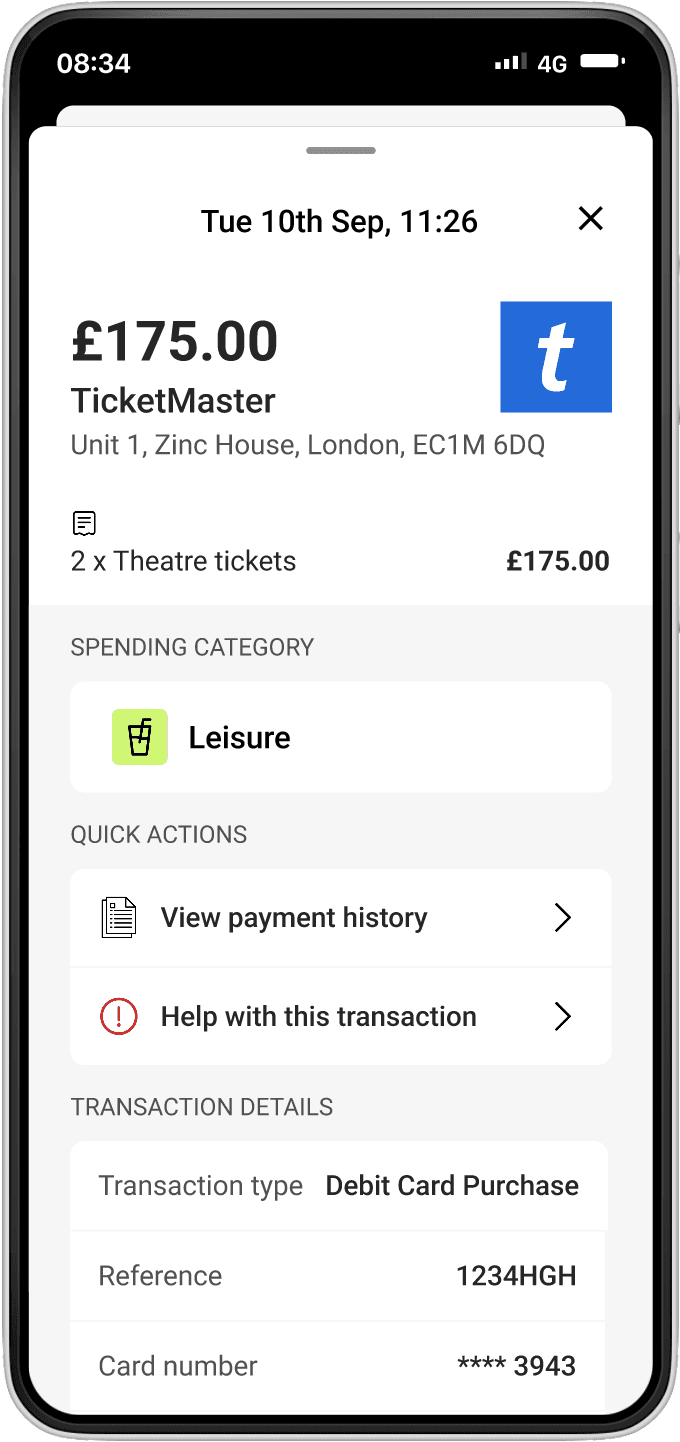
Disclaimer: The Work for this project is protected under NDA, so any visuals shown have been produced for illustrative purposes and are not the actual work produced
The Problem
The client, a major UK high street bank, faced media criticism for having the industry's highest complaint rate. Analysis showed that their "dispute a transaction" process was the leading source of complaints and generated a high volume of customer calls..
The Challenge
Media criticism triggered concern among senior leadership, creating urgency to deliver low-cost, short-term fixes with minimal development to quickly reduce complaints and call volumes. Once these immediate issues were addressed, we defined a north-star direction for a fully digitised journey, removing reliance on physical communications, branches, and telephony, and aligning with the client’s broader digitisation strategy.
Understanding the journeys
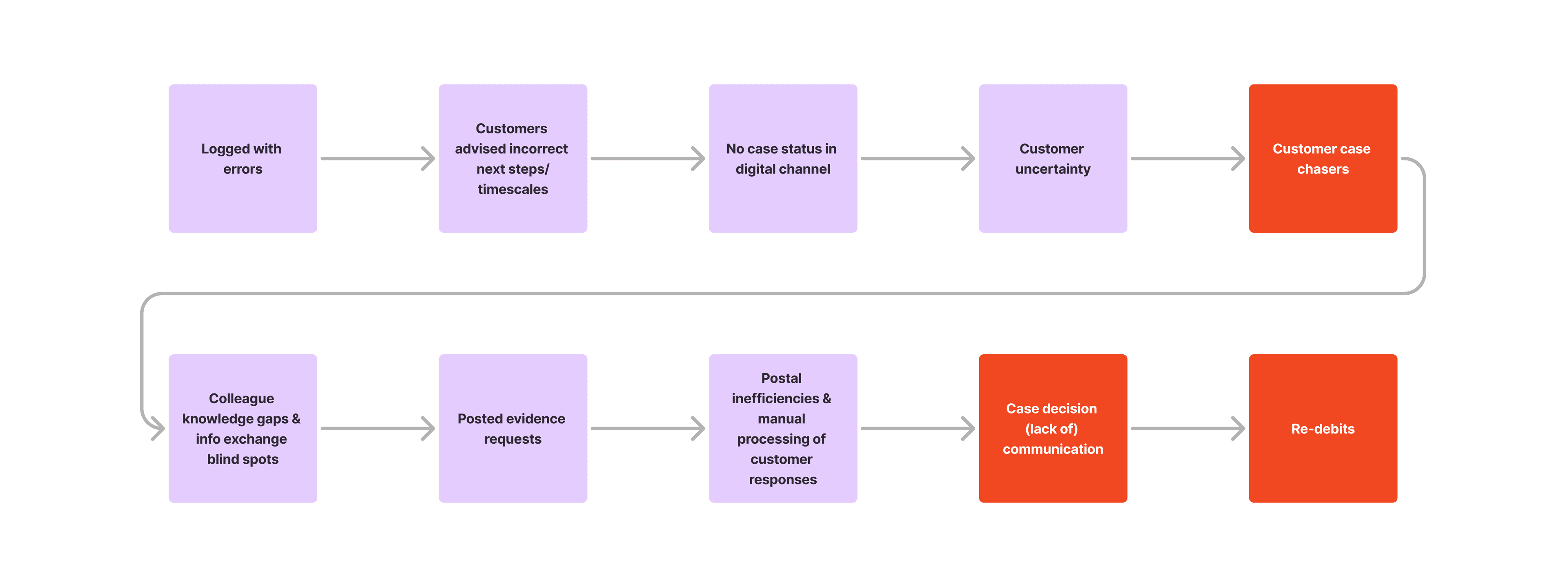
We worked with SMEs and front- and back-office teams to map the end-to-end dispute journey across customer, operational, and technical perspectives. We also analysed dispute-related complaints and voice analytics, giving us a clear view of the key pain points:
- Errors during telephony dispute logging created downstream issues
- Inconsistent and inaccurate service advice drove complaints and calls
- Lack of digital status updates led to high call volumes
- Poor interoperability across teams, systems, and data
- Delayed or missed dispute letters (e.g. evidence requests) caused frustration and negatively impacted outcomes
Tactical workshop
I facilitated a tactical workshop with the product team, including the product owner, SMEs, solution architects, front- and back-office colleagues, and analytics. We reviewed the as-is journey analysis and complaints data, and created user archetypes to ground discussions in the current customer experience.
We aligned on the primary sources of customer frustration:
- Disputes are highly emotive, creating anxiety. With no digital self-serve options, customers were forced to contact support
- Inconsistent and incorrect advice from front-line colleagues led to repeat contact, mistrust, and complaints
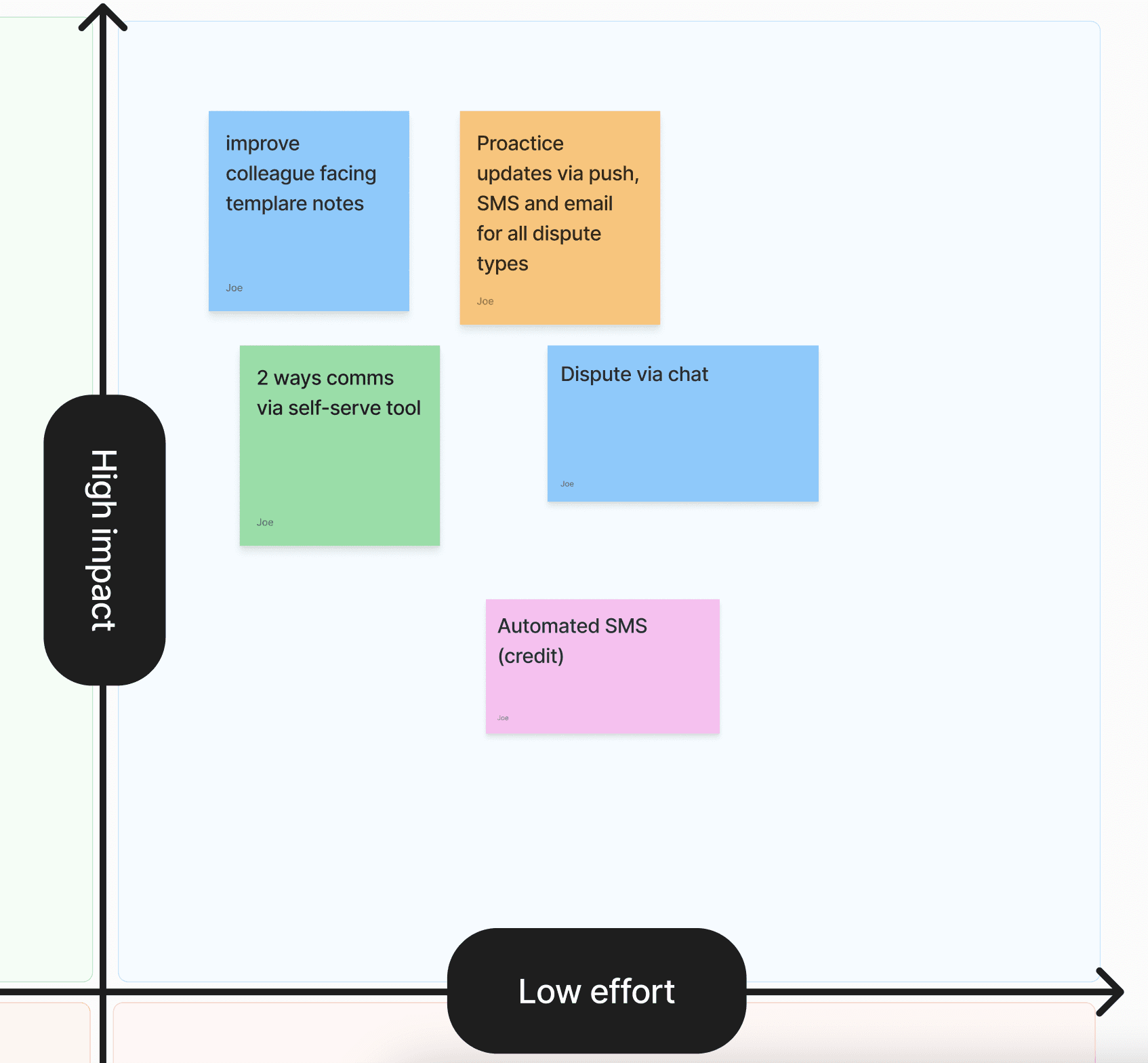
Using How Might We questions, the team generated tactical ideas and prioritised them using a simple 2×2 matrix, focusing on high-impact, low-effort opportunities in collaboration with technology stakeholders.
Prioritised Solutions
Following the workshop, and some further analysis, the solutions prioritised were:
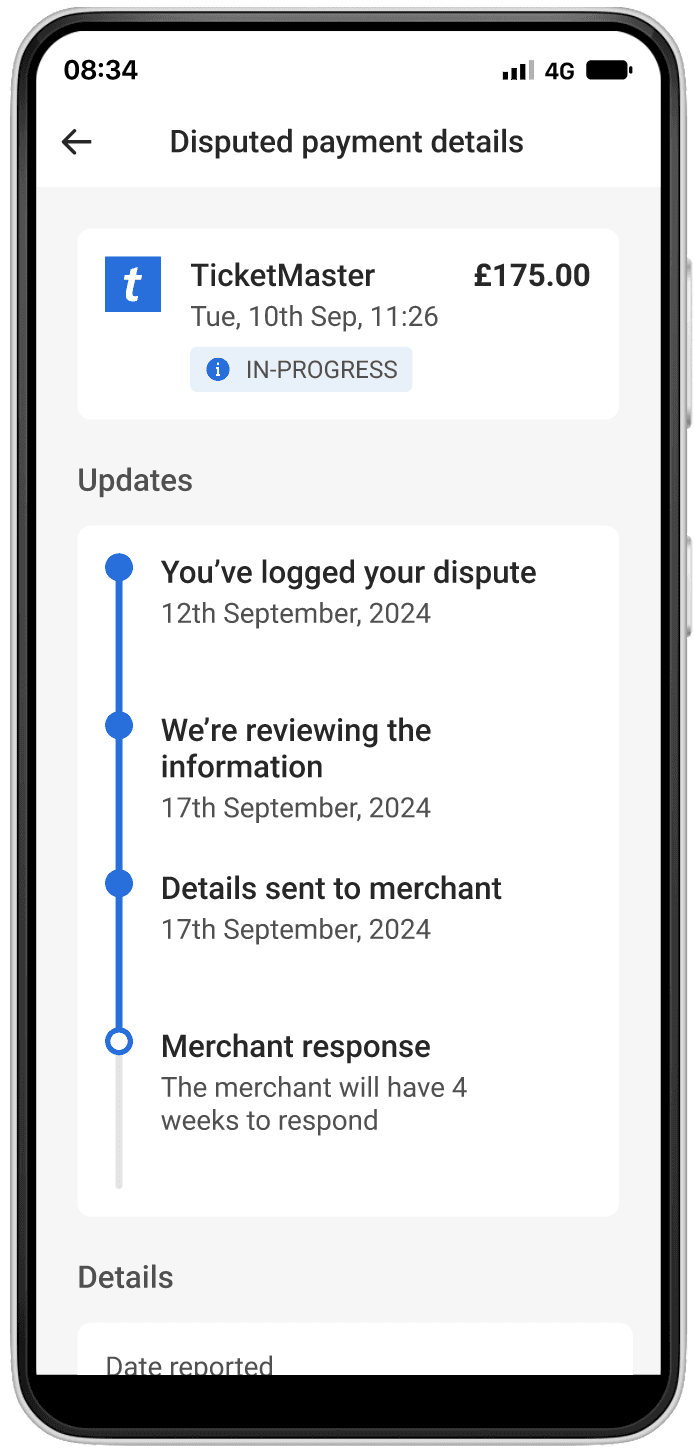
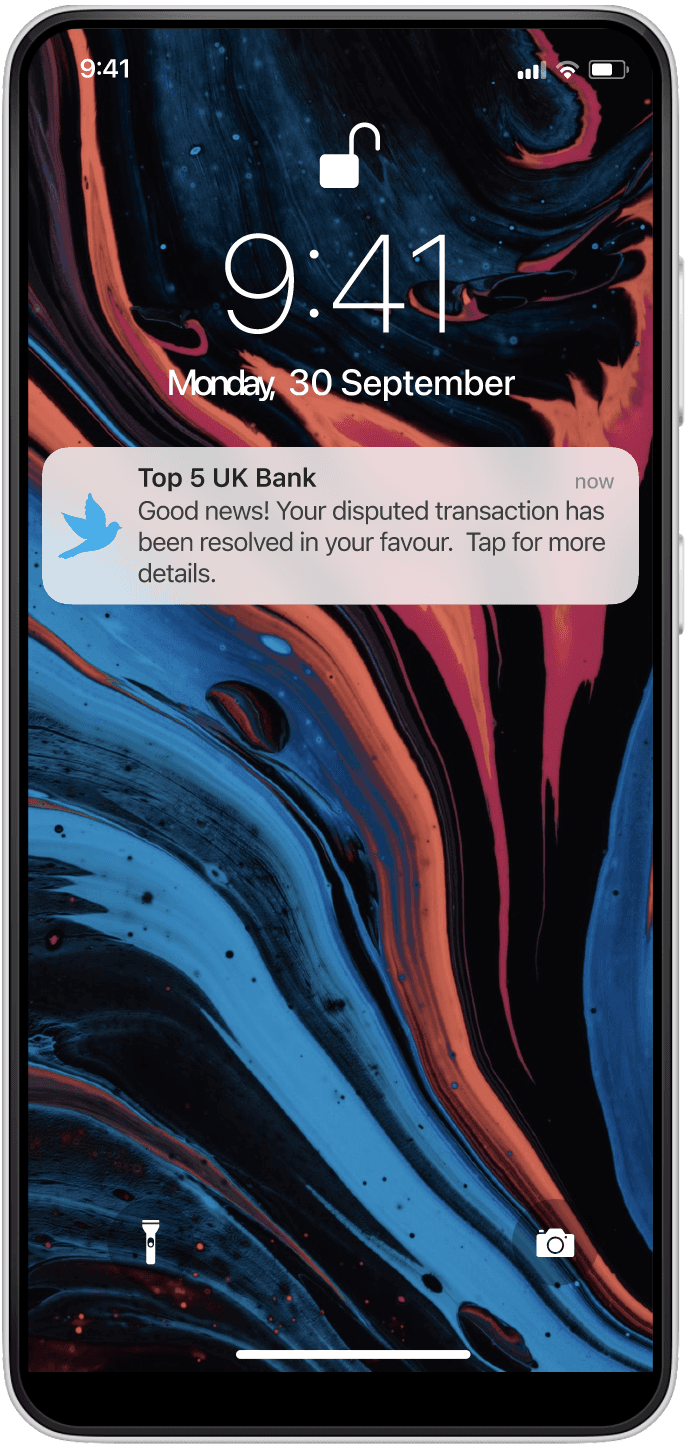
- Semi-automated SMS updates to keep customers informed about the status of their disputes, reducing the need for them to call in for updates
- Semi-automated update notes passed from back-office systems to front-office systems. so when customers do call, front-office colleagues can provide accurate, up-to-date information, reflecting the current status of the dispute.
North-star journey workshop
Following the mobilisation of operational teams around the tactical solutions and their release, we turned our attention towards what a strategic north-star disputes journey could look like.
I hosted and facilitates an on-site workshop with the client. Here’s how we approached the day:
Alignment to north-star metrics
Ahead of the workshop, I collaborated with the journey owner/product owner to define key north-star metrics to measure success which centred around complaint, call & lifecycle reductions and increased digital adoption, NPS & self-serve rates.
We positioned these metrics in a visible position in the workshop as a constant reference for our attendees during the day.
Aligning the group to today’s journey problems
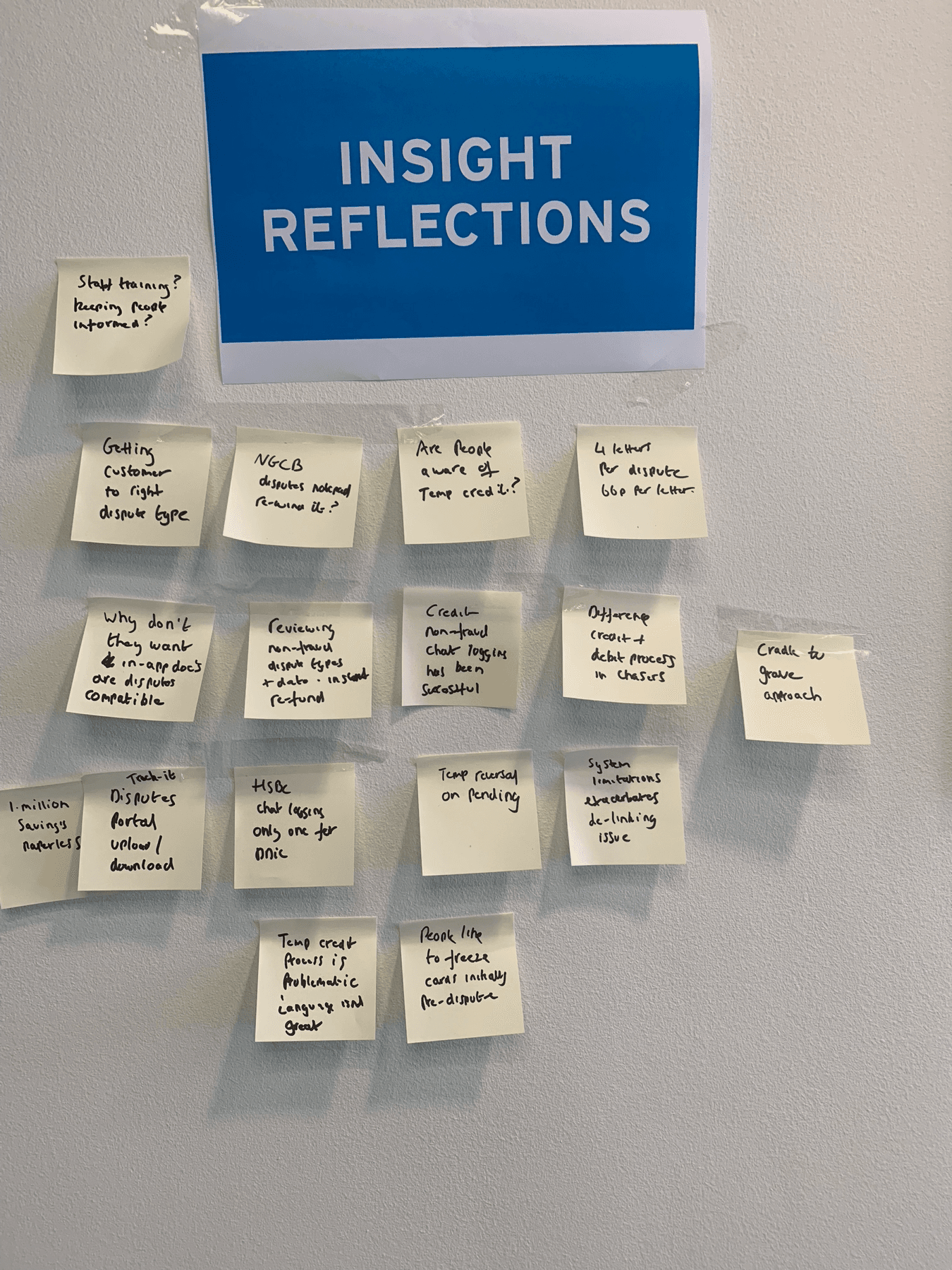
We reviewed new insights, including a recent root-cause complaints analysis, existing journey analysis, and findings from a recent research study conducted with existing customers around their recent experience of disputing a transaction. This insight segment ensured everyone understood the current challenges.
CX principles
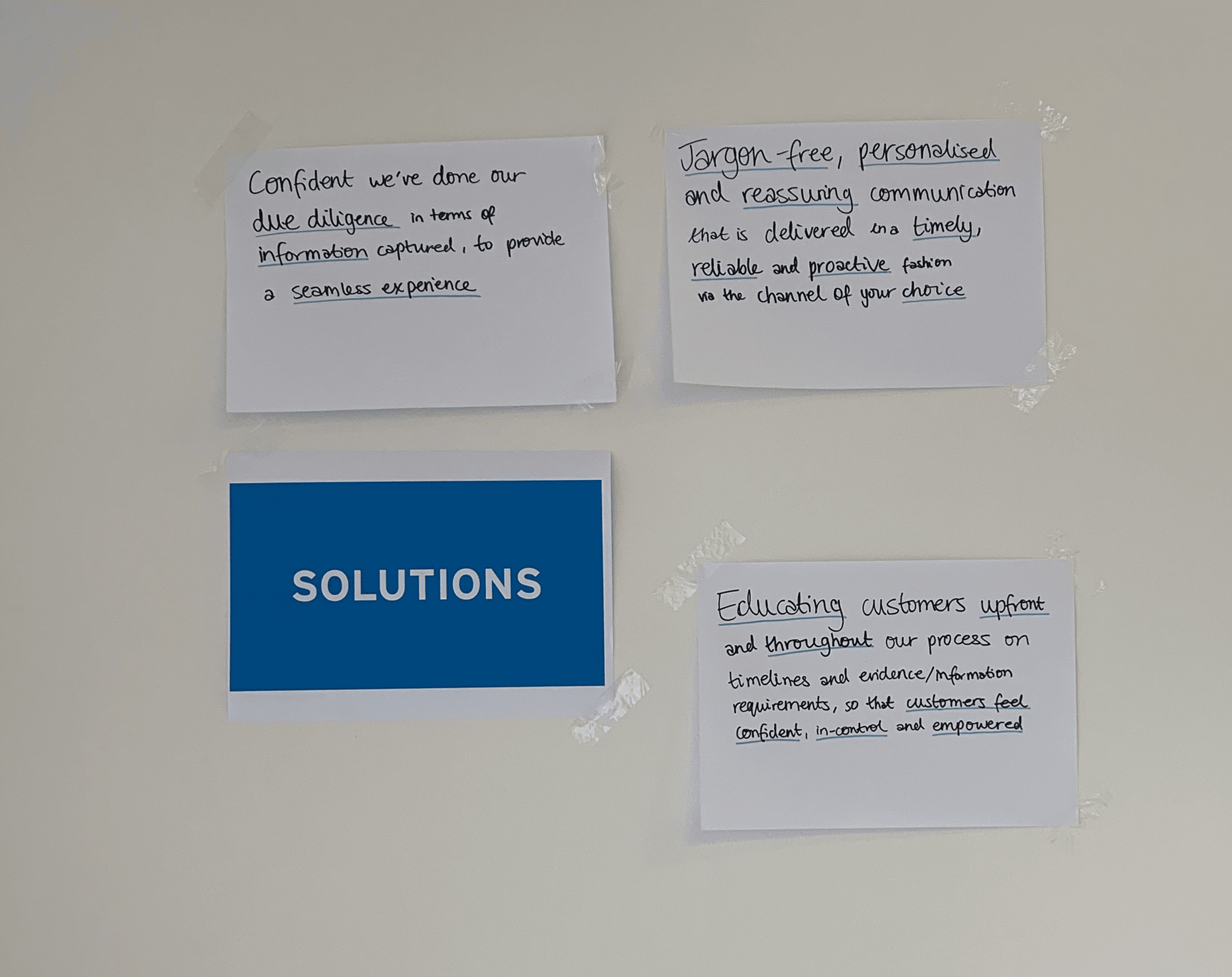
Together, we established customer experience principles to serve as a yardstick for ensuring we design a brilliant and customer-centric journey.
Design ideation
We ran ideation activities, including Crazy 8s, and allocated specific dispute scenarios to teams, who then created storyboards to explore end-to-end solutions. The only additional guidance we gave the teams were to consider the insights we’d reviewed, the north-star metrics we were targeting and the CX principles we’d co-created.
Prioritisation
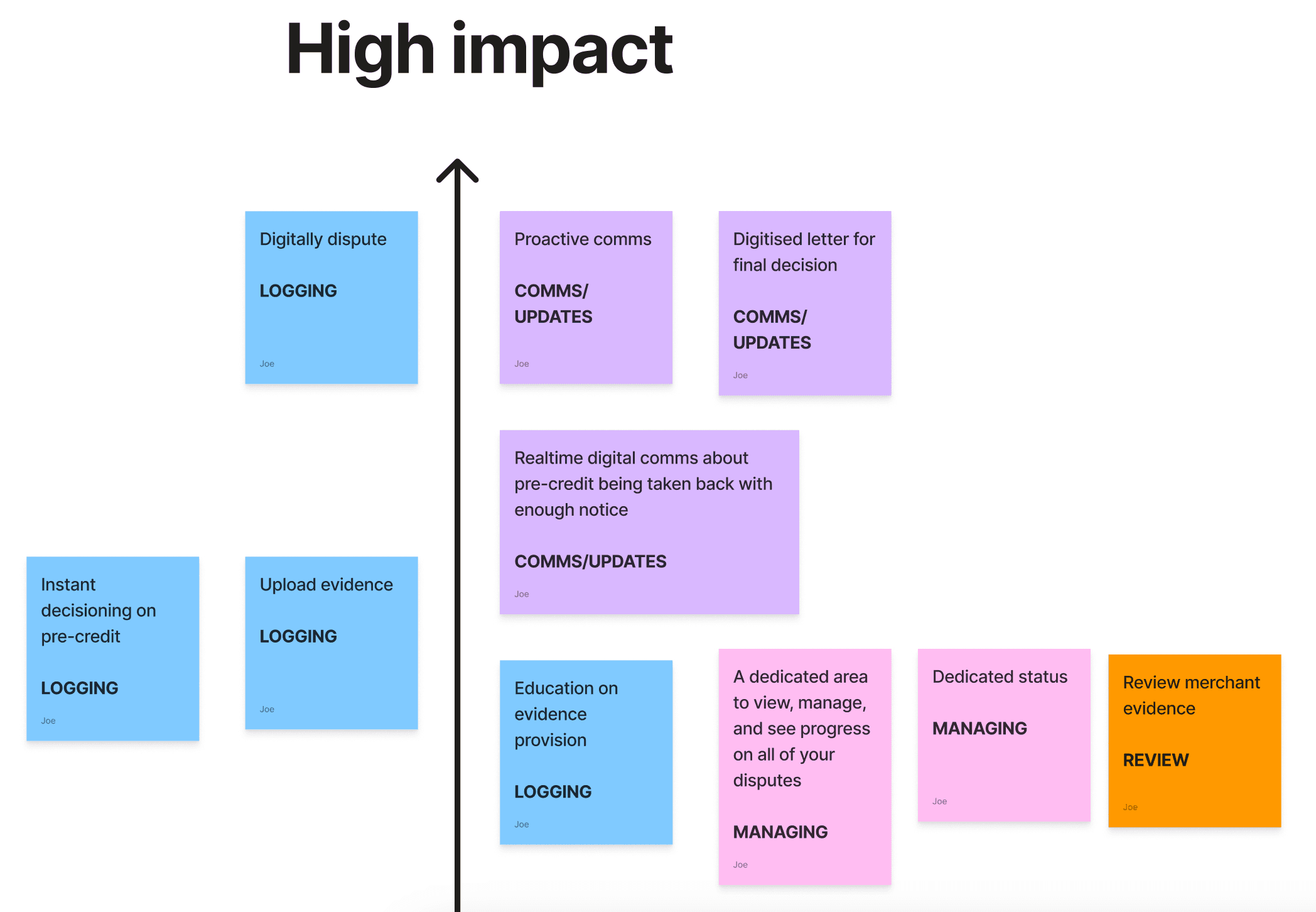
Finally, we prioritised solutions based on their assumed impact to the north-star metrics and their alignment with the CX principles.
Delivery prioritisation
To further help prioritisation decision, I supported the business case development conducted by the product owners as well as the technical t-shirt sizing conducted by a solutions architecht.
Research
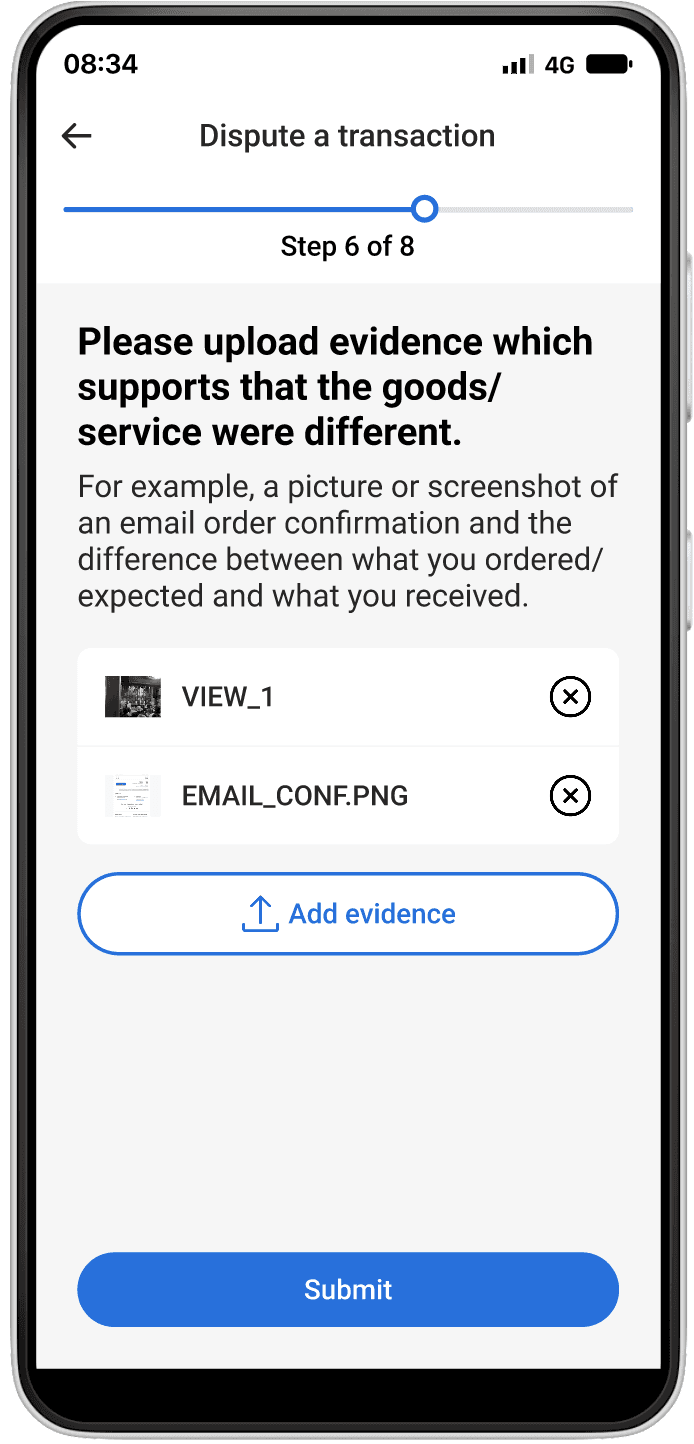
I partnered with the research team to design a study exploring customers' perceived value of north-star features. During the study, customers interacted with prototypes of the proposed journey. The findings revealed that customers mostly valued features that kept them updated on their disputes' progress and enabled self-service—particularly the ability to upload supporting evidence directly through the app.
Prioritised features
Following this period of analysis, and based on a measured view across our north-star metrics, understanding of customer needs, and the technology requirements we priorited proactive digital communications.
At time of writing, we’re working to prioritise dispute scenarios where the digital communications will have the biggest impact on call and complaint metrics. This first phase of work is due to go into production in Q1 2025.
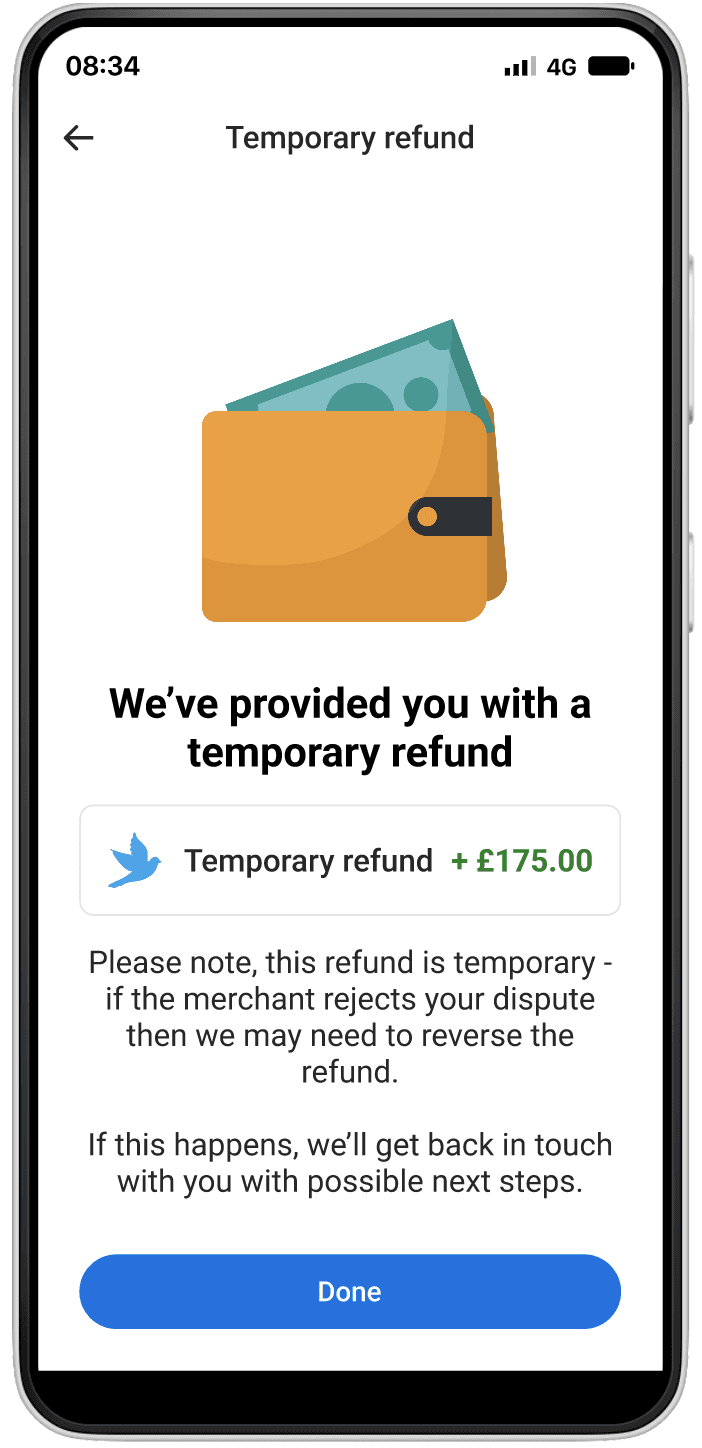
Selected Mockups
Results & Outcomes
The tactical improvements demonstrated that clearer, proactive communication could reduce avoidable contact while giving customers and frontline colleagues better visibility of dispute progress.
Customer behaviour
35%fewer chasers
Reduction in customers contacting the bank for dispute status updates.
Operational impact
60%fewer repeat calls
Reduction in repeat chaser calls following the introduction of proactive updates.
Customer experience
Fewercomplaints
Improved case notes helped frontline colleagues give more accurate updates, reducing complaints during chaser calls.